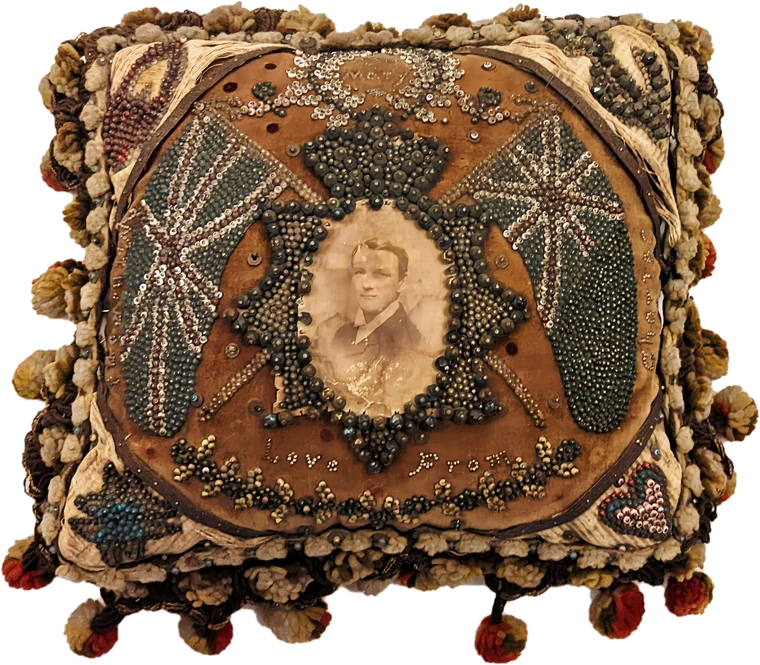
Uncovering the stories of ordinary people overlooked in conventional records — from the objects tied to their separation and loss, to the forgotten lives and legends embedded in London’s streets.
Pincushions stitched by servicemen, coins engraved by sailors and convicts, tokens left with foundling children, hair kept as a lasting relic — the everyday objects people turned to when words weren’t enough.
Explore the research →The Whittington Stone on Highgate Hill, and the legend of Dick Whittington turning back to the city. Followed through early texts and chronicles, the story is traced as it changes across the centuries, alongside the growth of London itself.
Explore the research →Richard Whittington, the sailor Jack Tar, the bus driver Albert Luxton, and the martial heroes of Victorian Britain such as Havelock, Roberts and Baden-Powell: how lives were shaped into folk heroes by propaganda, reflecting the outlook of a rising middle class and working class — reconstructed from primary sources.
Explore the research →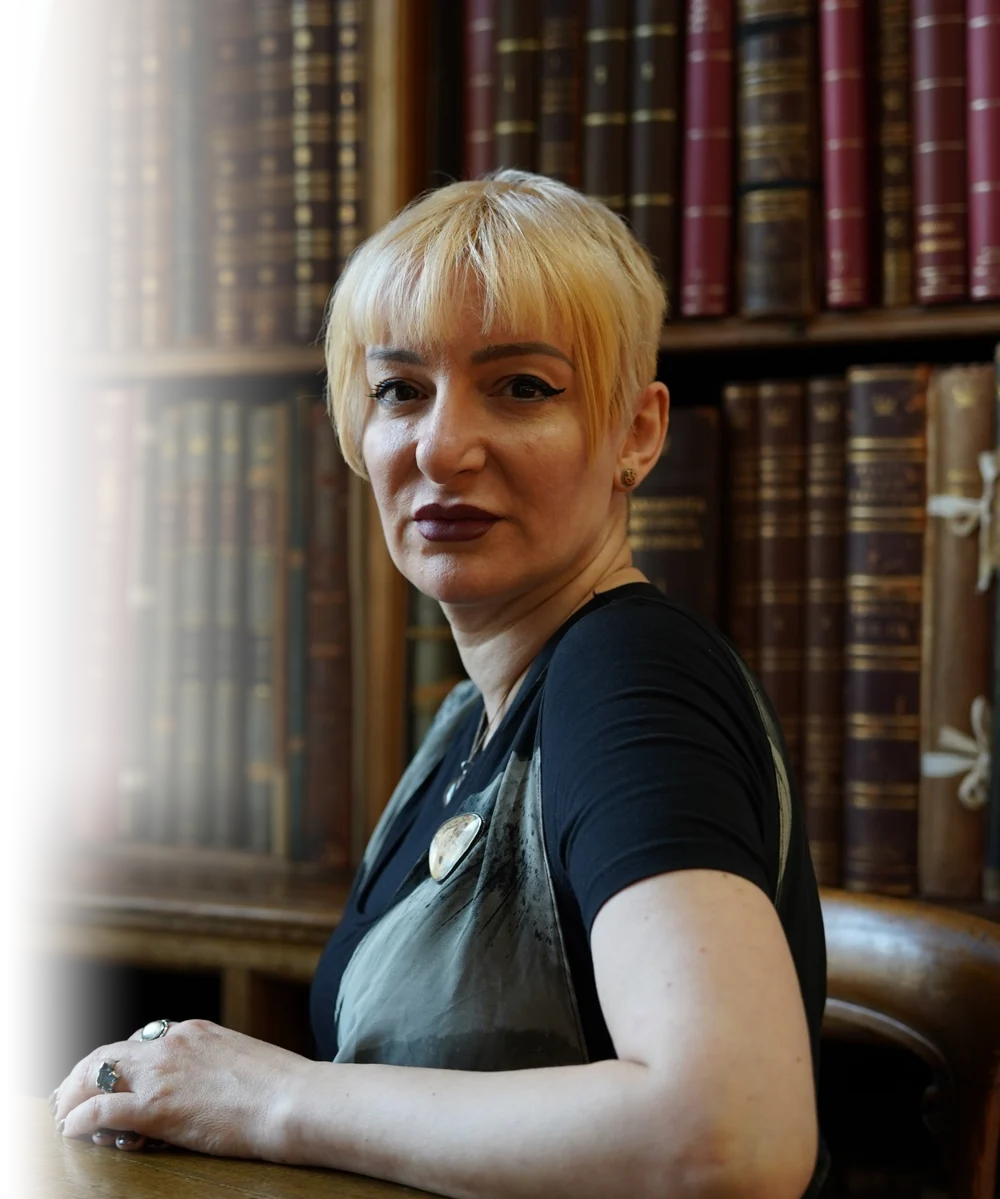
Alessandra Curtis is a British-Italian folklorist with a background in archaeology, driven by a passion for material culture and London history.
She holds an MA in Folklore Studies from the University of Hertfordshire (2023). Her research draws on a wealth of social history and curious detail to explore the forgotten meanings attached to everyday items — objects that tell the stories of ordinary people, often overlooked in conventional records.
Her approach is interdisciplinary by design: researching a single object or story through the lenses of anthropology, archaeology, history, and material culture at once — a method still rare in the field, and one that has taken shape only in the last twenty years. Sitting within the broader field of Sociocultural History, this work contributes to the emerging study of the material culture of emotions.
She has presented her research to the Folklore Society and the Society of Antiquaries, was the subject specialist for “The Material Heart: Front Line to Home Front” at the Fashion and Textile Museum, London, and curates and delivers public lecture series, including “Tales of Departure” for the Abney Park Cemetery Trust.
The Folklore Society
The Society of Antiquaries
From the exhibition panel, “The Material Heart” (2026):
“In 2017, I lost someone very dear to my heart, abroad. What pained his sister and me was that, though we had his everyday belongings and photographs of him, we did not have anything more personalised from him. A year later I fell in love and found myself drawn to hearts. A heart-shaped Victorian pincushion seen in a market aroused my curiosity. This turned into a passion and I became an avid collector, academic researcher and lecturer.”
Photo: Anna-Rose McChesney
From the world’s only specialist collection of Military Pin-Stuck Cushions to original detective work in undocumented corners of London’s history, this research also examines how folk heroes are made, and how military and social propaganda shape the stories told about them. It ranges from flagship specialities to talks given in conversation with the field’s leading scholars.
Interdisciplinary fields drawn from Cultural History and Anthropology
The world’s only specialist in this subject, holding the largest known collection
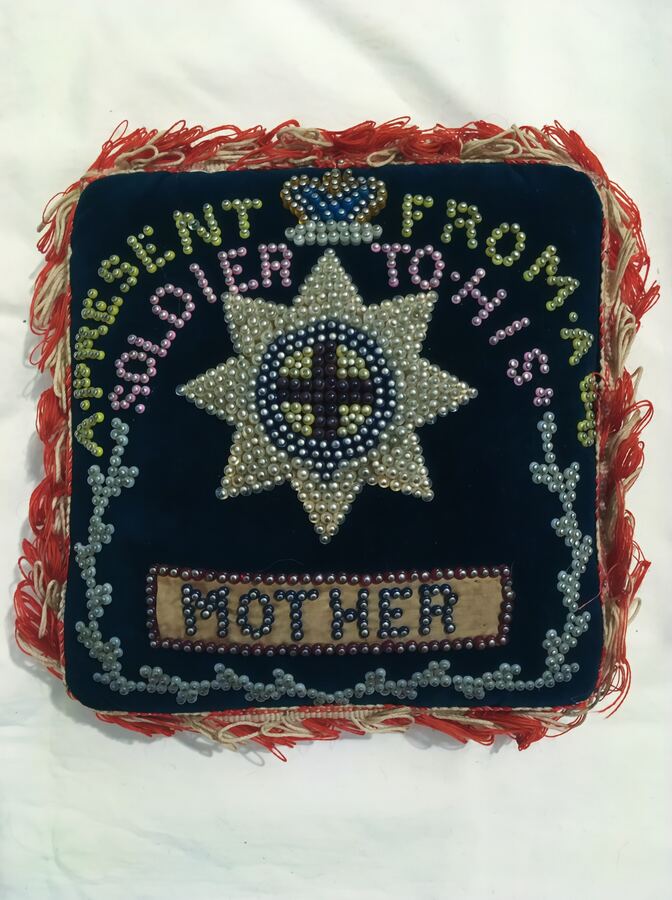
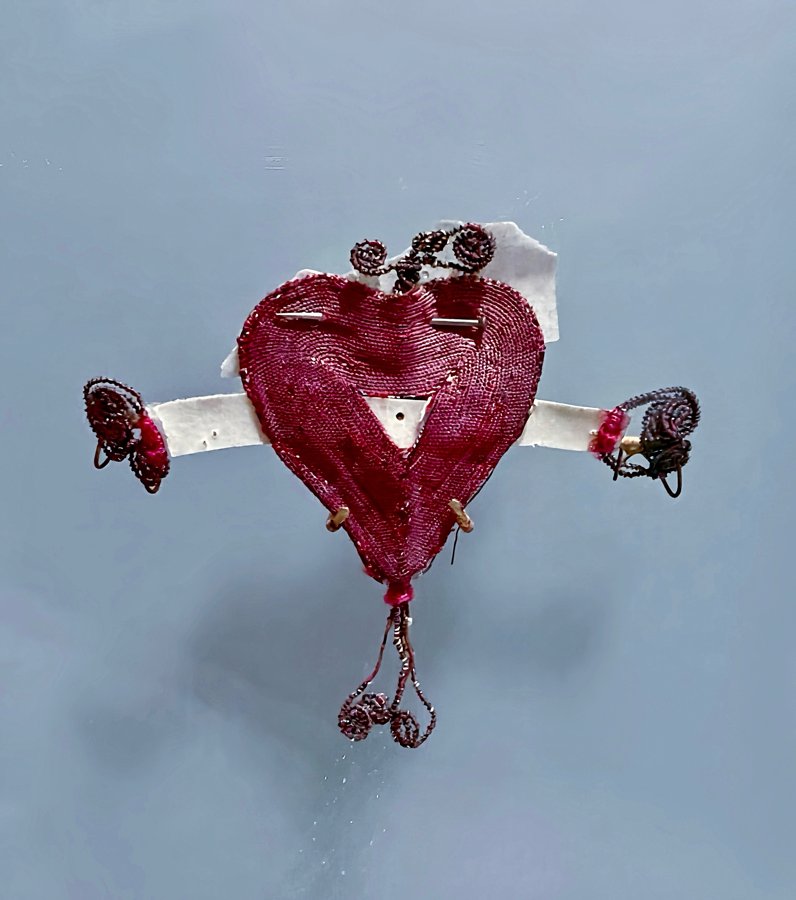
For nearly 80 years, from the 1840s to the First World War, servicemen hand-stitched elaborate cushions covered in pins, beads, and regimental motifs, and sent them home to loved ones. Most British households would once have recognised them. They are sometimes mistakenly called “Sweetheart Pincushions.” Today, they survive only in a handful of private collections, and academic study of them is almost nonexistent — public knowledge, where it exists at all, is often incorrect.
Drawing on her own extensive collection, this research uncovers why, where, and for whom these objects were truly made — and what they reveal about masculinity, emotional life, and craft during wartime. Her research was the basis for “The Material Heart: Front Line to Home Front” at the Fashion and Textile Museum, London, and has been presented to the Folklore Society and the Society of Antiquaries.
More from the collection — click to enlarge
Reconstructed almost entirely from primary-source newspaper research
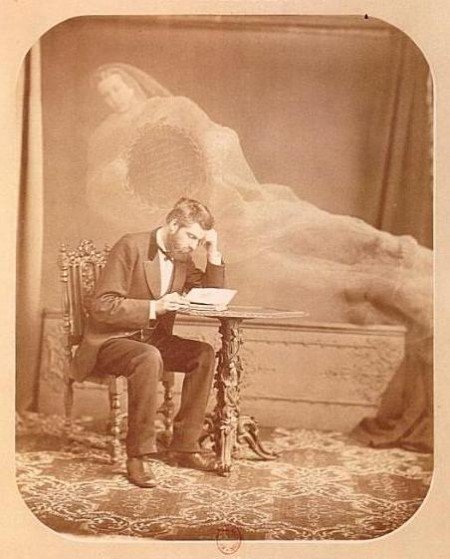
It’s 1872, and a new phase of British Spiritualism is developing. Driven by the Victorian need for evidence of the afterlife, the collodion process of early photography seemed to hold the key to ghost manifestation — a potential upgrade for Spiritualism from faith to science. For a while, a modest studio in fashionable Islington, London, became the centre of mediumistic action, dividing public opinion.
Little has been written on this story. She reconstructed the narrative herself, cross-referencing period newspapers to unpack the phenomenon in full: sitting methods, the human connections and reasons behind why people sought them out, the publicity surrounding the studio, questions of professional standards, and the newspaper rivalry that helped fuel the hype in the first place.
Built on original archive material spanning centuries
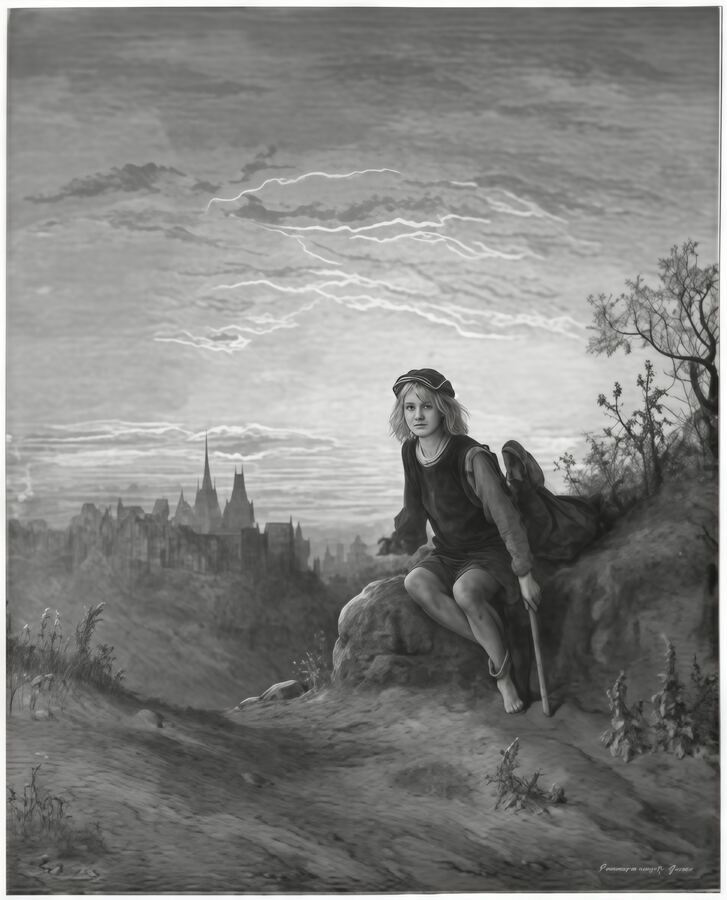
The Whittington Stone is a puzzling monument. Resembling a milestone, it sits at the foot of Highgate Hill, marking the border between Islington and Highgate — and encapsulates the essence of Dick Whittington’s story, symbolising resilience and the spirit of London. Its legend goes hand in hand with the development of the city itself, its significance rooted not only in history but in its ongoing role in shaping the medieval city landscape and social-economic development.
This research traces the legend’s roots through original archival texts and chronicles across several centuries, unpacking its folkloric motifs and building on the narrative of the unpromising folk hero archetype. Her work also dwells on the middle-class propaganda the legend carries, and on the possible inspirations behind the story itself.
Photograph colourised by Alessandra Curtis
Original research, built from scratch — a story previously untold in the history of working-class London
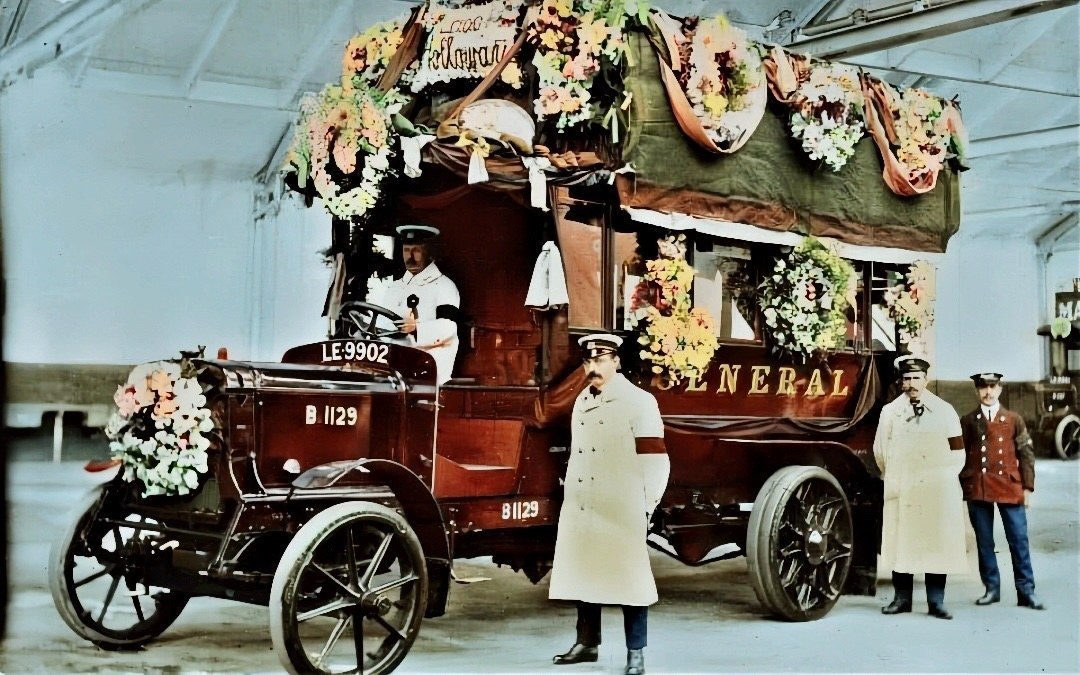
In June 1912, Albert Roy Luxton, a 34-year-old bus driver on Highgate Hill in Islington, realised his bus’s brakes had failed. He steered it away from a crowd of pedestrians, crashing into a pole in Archway, and died a week later from his injuries. Hundreds attended his funeral.
Practically unknown today, Luxton’s story had never been properly researched. She reconstructed his life and death from scratch, using newspaper archives from around the world — and, in the process, uncovered his grave. Her talk goes further than the story itself, examining why Luxton’s death was shaped into a hero narrative at all: a case study in wartime-era propaganda, the manufacturing of heroes, and the lives of ordinary working people in early twentieth-century London.
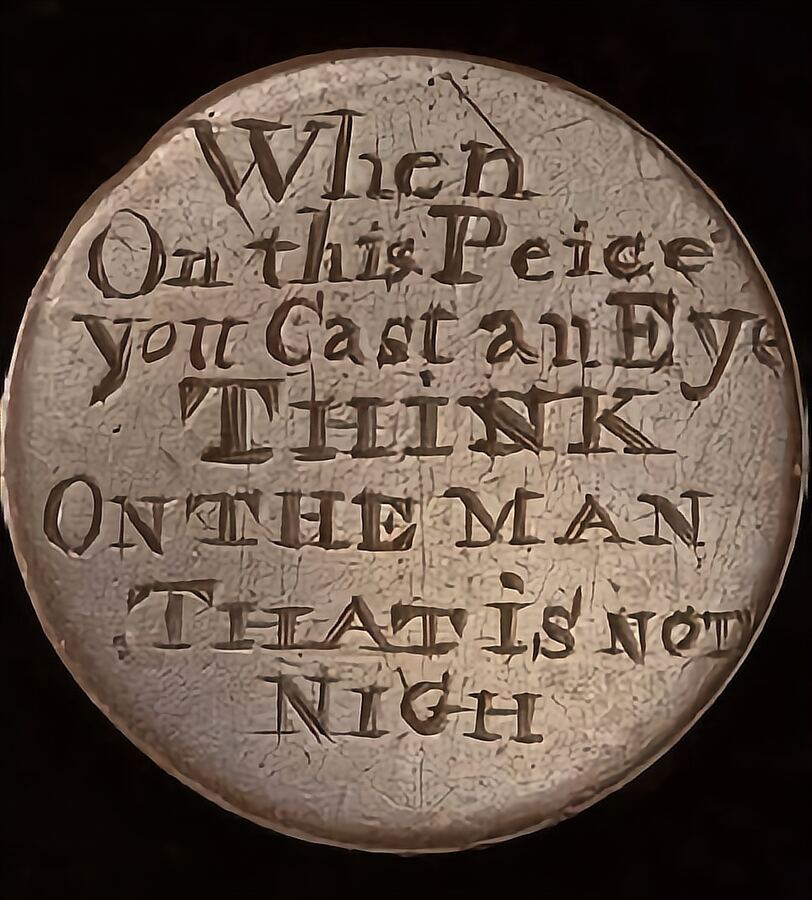
Image: National Museum of Australia
In conversation with the field’s leading scholarship
Parting coin keepsakes, typically manually re-engraved legal tender coins, were popular during the early modern period. These durable artefacts represent a form of material culture reflecting absence and separation, showing remarkable resilience over time. While numismatic collectors had previously recognised these tokens, they largely went unnoticed in academic circles until the 1990s. Their revival in scholarly interest can be attributed to Tim Millett, who generously shared his extensive private collection with museums. These love tokens can be categorised into three distinct areas, often linked to themes of transportation, providing valuable insights into how sailors, prisoners, and everyday individuals saw their connections and separations from loved ones.
In conversation with the research of Michele Field, Timothy Millett, Paul Donnelly, Ainslie Greiner, David Hallam, and Claire Tindal.
In conversation with the field’s leading scholarship
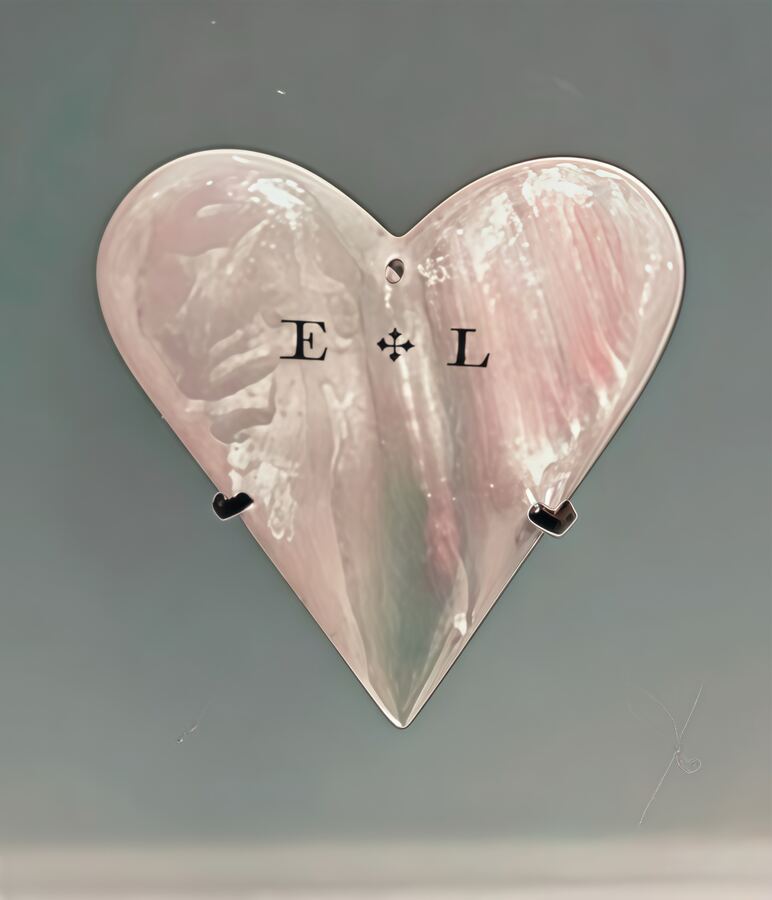
Part of the wider story of London’s care for its most vulnerable children, this research explores the Foundling Hospital, which in just sixty years recorded around 18,500 admissions of children left in its care — each, by requirement, accompanied by a small “peculiar thing” left by a parent. Her talks explore the emotional narratives behind these tokens: the devastating choices behind each act of surrender, and the enduring love embedded in objects left behind.
In conversation with the scholarship of Janette Bright, Jennifer Clark, Alice Dolan, Jennine Hurl-Eamon, John Styles, and Maria Zytaruk.
Original collection; strong scholarly grounding, in conversation with specialist practitioners
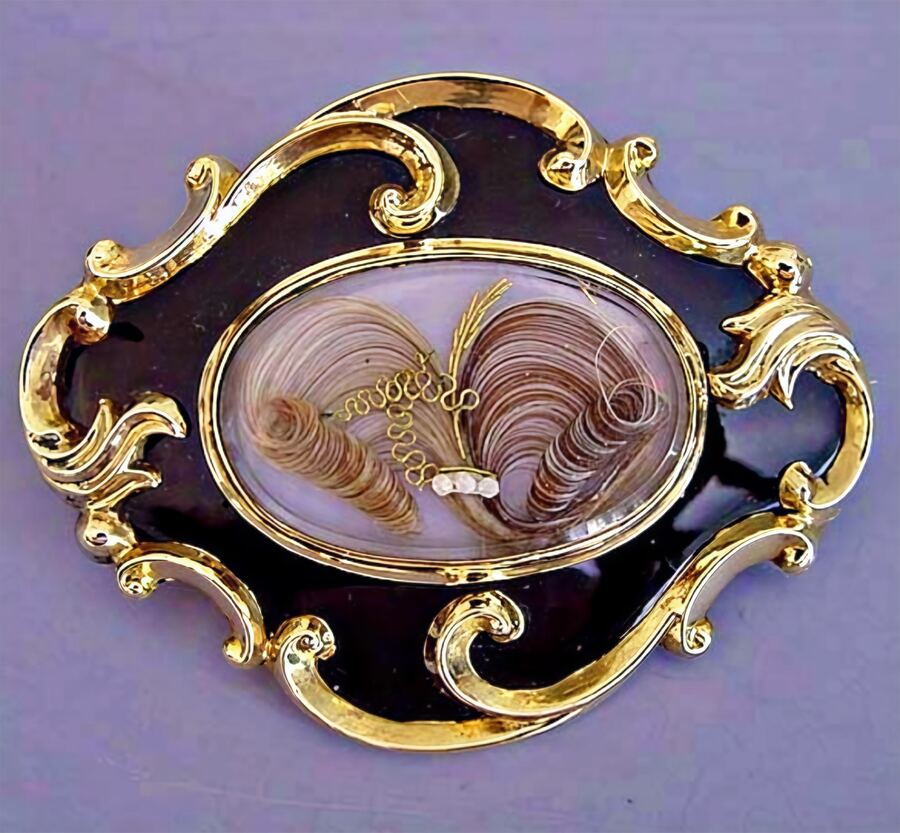
Hairwork is the almost forgotten craft of manipulating human hair into decorative designs for jewellery or artwork. Some pieces are purely ornamental, others for commemoration, but all are imbued with meaning, folklore, and ritual significance. Today, only a handful of artisans worldwide continue to practise it. Until the late nineteenth century, however, disembodied hair was regarded as a very precious material, and hairwork was a cherished folk art of the middle and upper classes — a lock of hair seen as a portable human relic, maintaining an earthly bond with loved ones.
Four distinct techniques from the Georgian and Victorian eras are explored here, examining their use for the deceased, the living, or both, and the cultural contexts that shaped them.
Ann Louise Luthi and Hayden Peters remain the foremost authorities on the jewellery itself; this work also engages with the broader scholarship of Karen Bachmann, Helen Sheumaker, Deborah Lutz, and Jane Wildgoose.
In conversation with the field’s leading scholarship
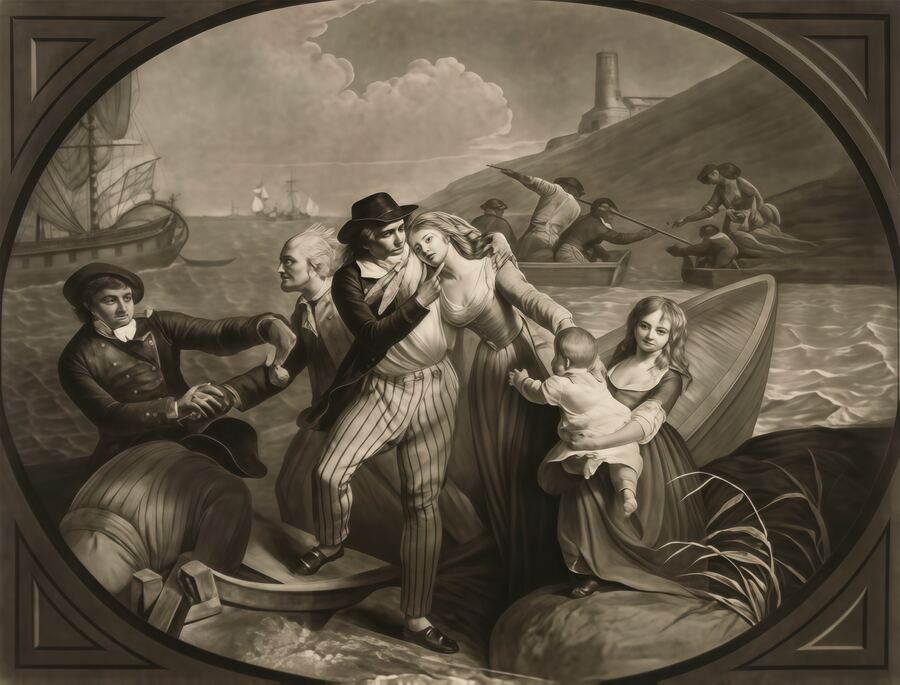
This research explores the folk narrative of Jack Tar, the epitome of manhood for the whole nation, encapsulated through ballads, imagery, and material culture. This portrayal of the sailor-hero from the working class provides valuable insights into the ideals of manliness prevalent in the late eighteenth century.
Jack Tar’s narrative offers a lens into societal perceptions of men and emotional sensitivity. Seafarers embodied intangible values such as bravery, stoicism, and loyalty, at a time when prevailing military ideals condemned any display of vulnerability, fostering an environment rife with homophobia. Tears, traditionally associated with femininity, were often seen as a sign of weakness in men — making the act of crying, for servicemen, a complex interplay between masculinity and femininity. Yet sailor pottery, popular in British households, depicted Jack Tar as capable of profound emotion, including tears — a man who sacrificed love and home for his country, permitted to grieve without his masculinity being undermined.
In conversation with the scholarship of Joanne Begiato (Bailey) on the sailor’s tear, and Brad Beaven on the social world of sailortowns, alongside the wider work of Matt Lodder, Marcus Rediker, and Maya Wassell-Smith.
Lectures and public talks on parting, loss, forgotten London lives, and the making of folk heroes through military and social propaganda, brought directly to audiences.
No talks currently scheduled. New dates will be announced — join the mailing list.
A series of 7 lectures exploring separation, departure and death in social history and material culture — Abney Park Cemetery Trust, October–November 2026
Engraved Parting Coins (1752–1868)
Nov 20, 5:30–8:45pm
Image: National Museum of Australia
Foundling Tokens
Postponed to 2027 — date to be announced
Tales of Departure forms part of “Gates of the Abode”, Abney Park’s five-week seasonal programme of talks, workshops, and encounters exploring death, departure, and the unseen.
Available for public lectures, academic talks, and museum or heritage events — from a focused 20-minute conference paper to a full evening lecture.
Enquire about bookingBeyond talks and lectures, original, interactive experiences bring folklore and history to life — events designed to be taken part in, not just watched.
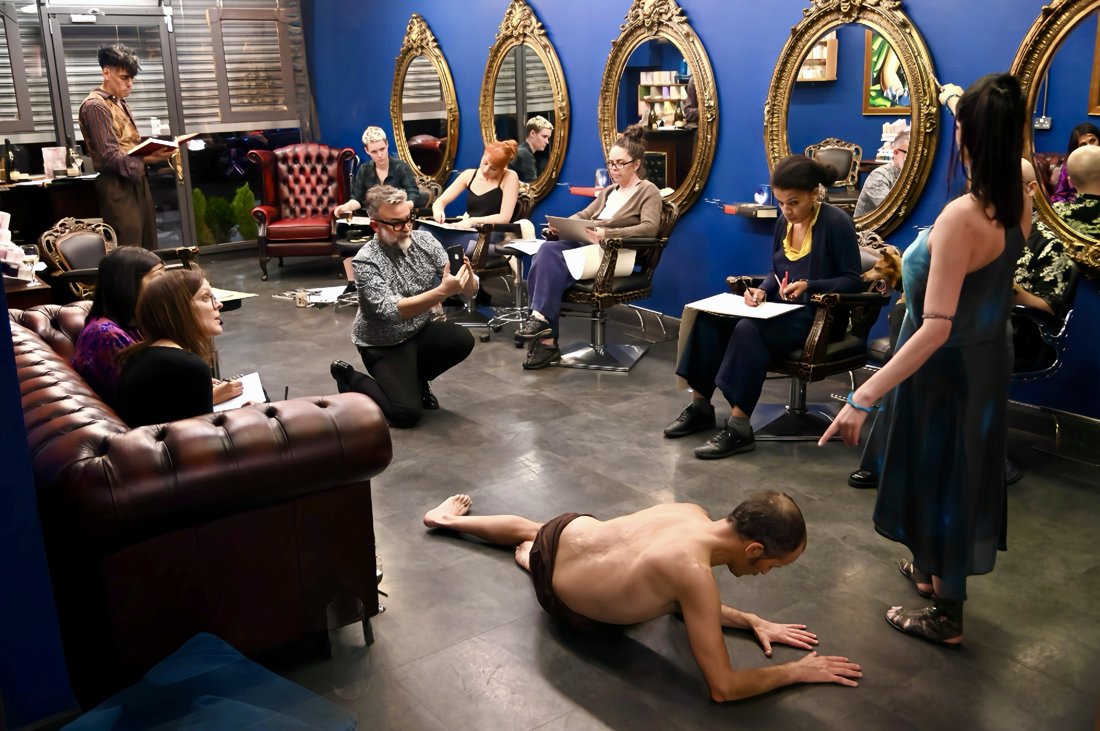
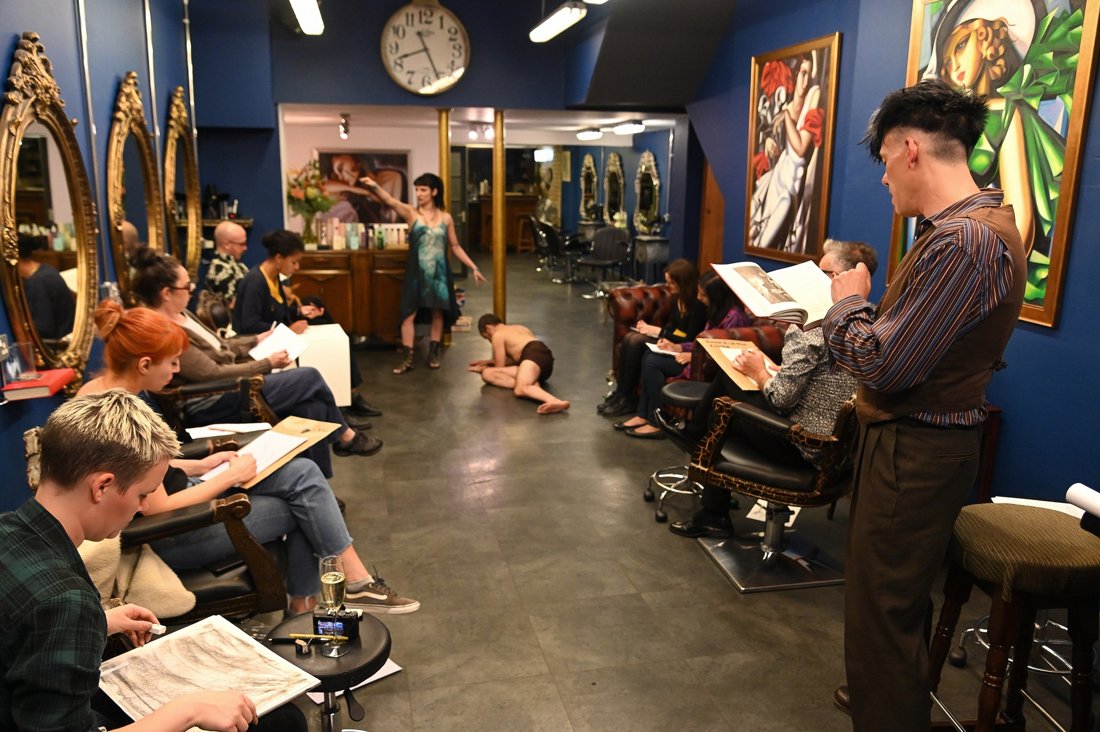
Available as a bespoke commission. Life Drawing Theatre is a format, not a fixed piece — future performances can draw on different stanzas of the Divine Comedy, or be reworked entirely around another text of your choosing.
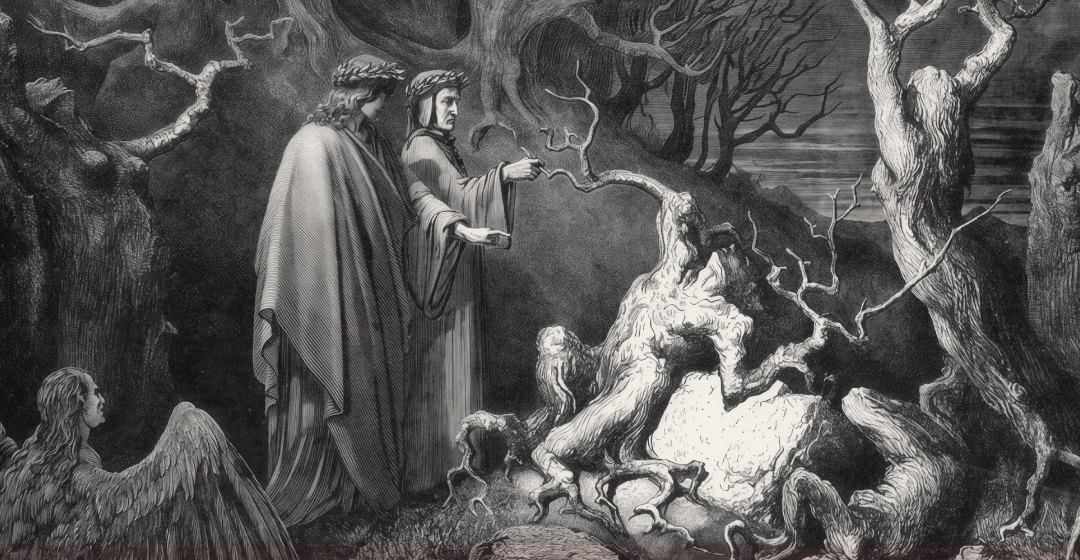
An evening of poetry, sketching, and folklore, inspired by Dante’s Divine Comedy
Sketchpads wait on every chair. As sonnets from the Inferno are read aloud, two models hold poses inspired by each verse — five to ten minutes at a time — while the audience, seated in a semi-circle around the stage, sketches what unfolds in front of them.
No artistic skill or prior knowledge of Dante is needed. Each stanza read aloud is fully unpacked in turn — its folkloric motifs explained, alongside the social and historical background that shaped it — turning a life-drawing session into a layered piece of interactive storytelling, part performance, part history lecture.
From a past performance
Available to museums, galleries, and media productions as a subject specialist — bringing original research, primary-source objects, and a rare depth of knowledge to projects that need it.
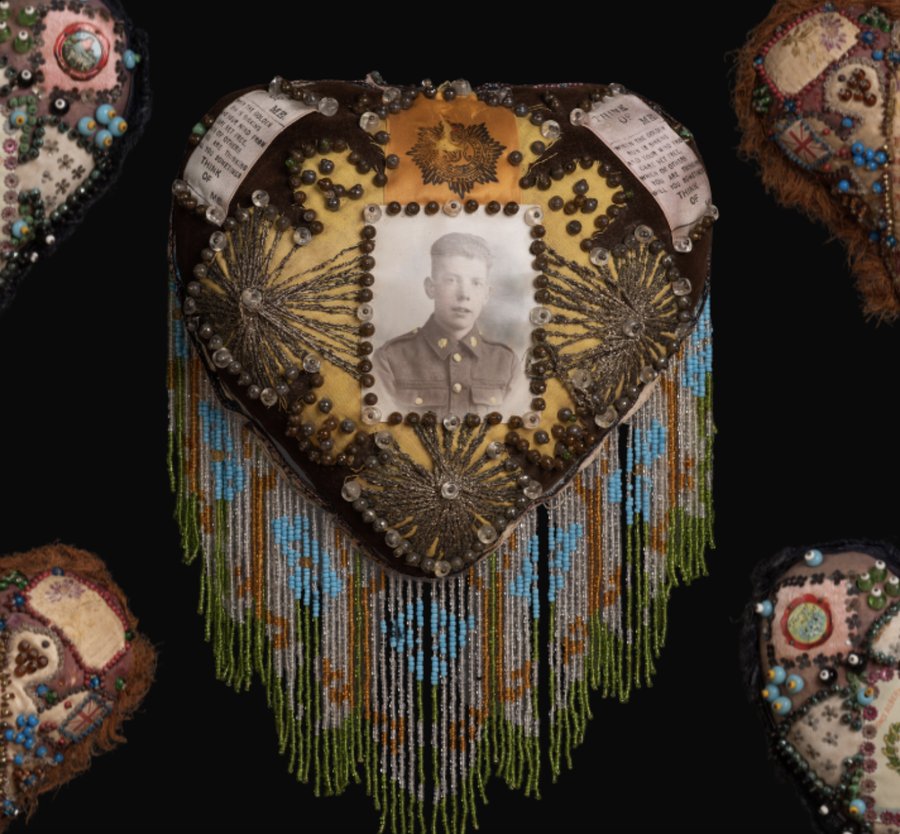
Photo: Felix Reitze de la Haye
Fashion and Textile Museum, London
Subject specialist for this exhibition, drawing on an extensive collection of Military Pin-Stuck Cushions and research into the military, textile, and emotional history behind them — the only specialist in this subject worldwide, holding the largest known collection.
Enquiries welcome. Get in touch about any of the following:
Prefer to write directly? hello [at] alessandracurtis.co.uk
News of upcoming talks, events and new research, sent occasionally. Unsubscribe at any time.